Modern interior design did not emerge by accident. It evolved in the early 20th century as a response to industrialization, technological progress, and changing lifestyles.
Today, it is defined by clarity, function, and material honesty—but understanding its true principles requires looking beyond the surface. What really makes a space “modern”?
Modern interior design is rooted in simplicity. Forms are clear, geometric, and free from unnecessary ornamentation. Straight lines, flat surfaces, and well-defined volumes replace decorative excess.
This does not mean sterile or cold spaces—it means intentional design. Every element serves a purpose, and visual noise is reduced to create clarity and calm.
Key characteristics: • Linear forms • Minimal detailing • Uncluttered compositions
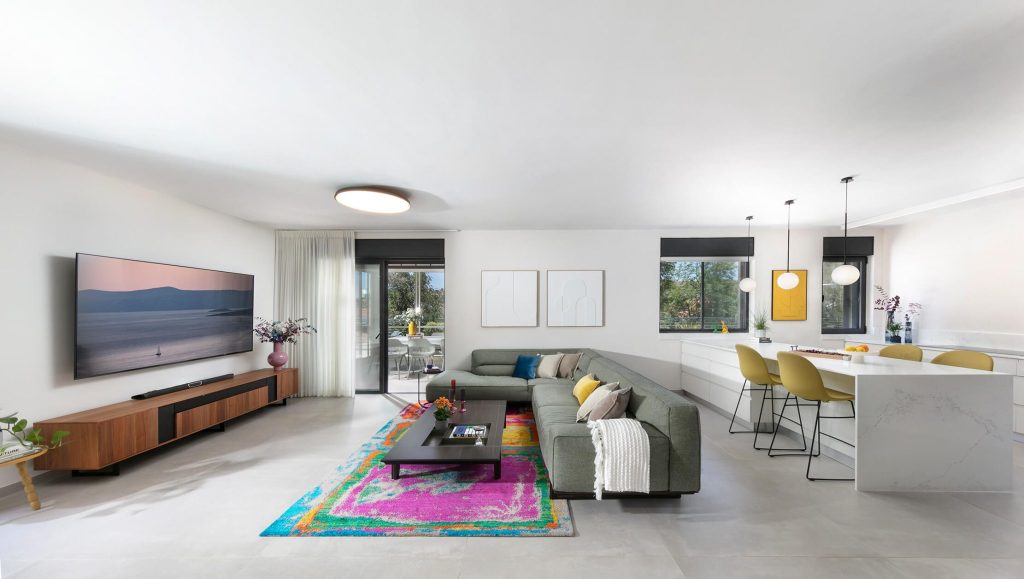
A balanced living room composed of clean lines and muted colors, expressing the clarity and structure at the core of modern interior design. Private residence, Kochav Yair.
Function Before Decoration
In modern design, function guides form. Furniture, layouts, and circulation are planned around real daily use rather than purely aesthetic considerations.
Open plans, logical zoning, and ergonomic planning ensure that a space works efficiently. Storage is integrated, transitions are smooth, and nothing feels accidental.
A modern space should feel effortless—not staged.
A structured balcony seating area continues the living room’s language, using aluminum and wood to create material continuity toward the garden. Private residence, Kochav Yair.
Honest Use of Materials
Modern design embraces material authenticity. Steel looks like steel. Concrete remains concrete. Wood is celebrated for its natural texture.
Rather than hiding structure or construction, modern interiors often express them. The beauty lies in proportion, balance, and how materials interact—not in excessive embellishment.
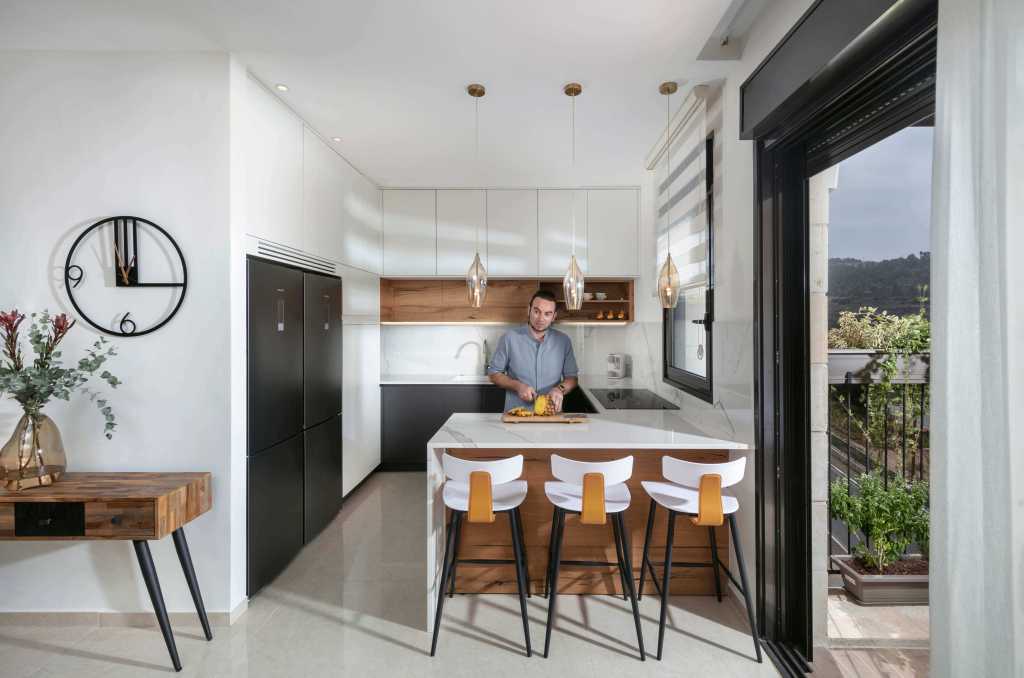
Black metal, oak wood, and light finishes combine in an organized open kitchen that feels both contemporary and inviting. Apartment, Jerusalem.
Balance, Light, and Spatial Flow
Modern interiors rely heavily on natural light and open spatial relationships. Large windows, visual continuity, and thoughtful proportions create a sense of flow.
The goal is not only visual harmony but spatial harmony—where movement feels intuitive and each area relates naturally to the next.
Light is not an accessory in modern design; it is a primary architectural element.
Black metal, oak wood, and light finishes combine in an organized open kitchen that feels both contemporary and inviting. Apartment, Jerusalem.
Conclusion
Modern interior design is not defined by trends, but by principles: clarity, function, material honesty, and balance. When applied thoughtfully, these principles create spaces that feel calm, relevant, and timeless.
If you are considering a modern interior design approach for your home, starting with these core principles can help ensure that your space is not only contemporary—but also deeply functional and meaningful.
Interested in applying modern interior design principles to your home? Feel free to explore our projects or get in touch to discuss your vision.